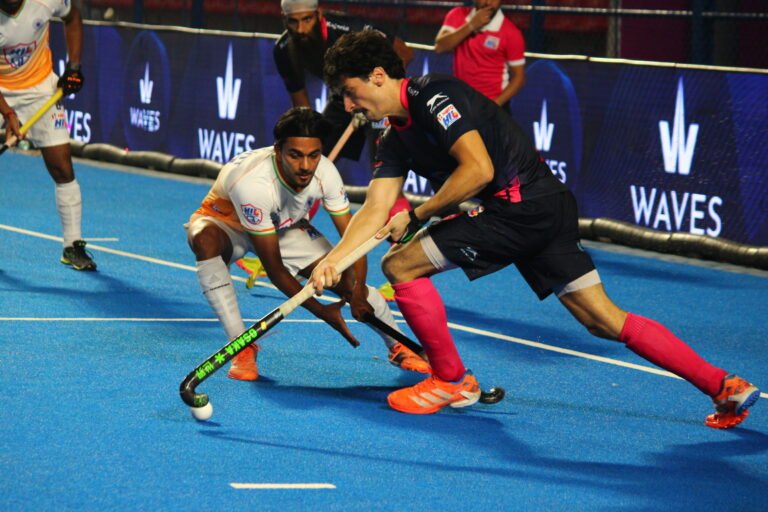

Japan vs China The early afternoon sun sat high above the Mayor Radhakrishnan Hockey Stadium when the first whistle blew, but the heat on the turf came from the two sides who walked out to fight for Pool C supremacy. In a tense and technical encounter, Japan U-21 emerged 3–2 winners over China U-21, powered by well-rehearsed penalty-corner sequences and ice-cold second-half composure.
The match was officially recorded as a 3–2 full-time result, with periods of 0–1, 2–1, and 2–1 across the contest. Matchreport
🔥 First Period: A Chinese Statement
China struck first and struck early. In the 11th minute, a penalty corner conversion by shirt #25 sent China ahead 1–0. Their movement had confidence: compact block, tight rotating midfield, and a willingness to test Japan along the right channel. Japan’s defenders were caught flat-footed on second balls and found themselves reacting instead of initiating.
The stadium, still filling with afternoon crowd, went silent for a moment—most expected Japan to dominate early. Instead, China absorbed and punished.
🎯 Second Period: Japan’s Penalty-Corner Masterclass
If the first quarter belonged to China, the second became the Samurai showreel. Japan earned a penalty corner in the 19th minute; shirt #17 converted to pull the game level at 1–1. There was no time for China to adjust. Mere seconds later in the 20th minute, another penalty corner—this time finished by shirt #14—turned the match to 2–1 Japan.
The two corners showcased a hallmark of Japanese youth hockey: deep drag-flick playbooks and precise variations. The entire Chennai bowl erupted in applause, and suddenly the momentum shifted. China pressed desperately, but Japan’s midfield pivot slowed the tempo, recycling possession into safer lanes.
💥 Third Period: Calm, Chaos, and Survival
With a narrow lead, Japan returned from halftime determined to suffocate tempo. Their defenders stepped up 10–15 meters, daring China to bypass midfield.
The breaking point came in the 50th minute, when a Japanese forward—shirt #9—drilled a field goal into the bottom corner to extend the margin to 3–1. For many fans, that was the dagger.
But China were defiant. They ramped up pressure, switching to vertical aerials and rushing the circle with speed. Their reward came in the 57th minute, when shirt #7 converted a penalty stroke, clawing the scoreboard back to 3–2.
The final sequence was frantic. China loaded the circle with five attackers, Japan threw bodies in front of shots, and the last counter-charge was met with desperate tackles. The clock ticked to zero—and the Japanese dugout exploded.
🏁 Final Word
The statistics will say Japan won by a single goal. The reality is they won because they stayed composed at moments that determine tournaments: penalty corners, restarts, and momentum shifts.
Pool C might become the tightest group of the FIH Junior Mens World Cup. If that is true, Japan just claimed the first psychological edge.
Follow BiGG Sports News for more sports stories
About the Author